Efficient data center cooling has a direct impact on computing performance, operational reliability and energy efficiency. Calefa delivers data center and server room cooling solutions across Finland using the AmbiHeat heat pump system, which recovers excess heat and converts it into usable thermal energy.
How can more value be produced with fewer resources? This is a defining question across industrial sectors, and data centers are no exception. In data center operations, the balance between computing capacity and energy use increasingly depends on effective waste heat management.
Calefa’s AmbiHeat heat pump system utilizes the waste heat generated in data center cooling with an efficiency of up to COP 5 and above. Read the reference case here.
Data centers consume large amounts of energy to maximize computing power. That energy does not disappear in the process; it is converted into heat in server rooms. Cooling is required to remove this heat and keep the data center operating reliably. The strategic question is: how can the waste heat generated by data center cooling be used productively?
Common methods for data center cooling
Air cooling
Free cooling
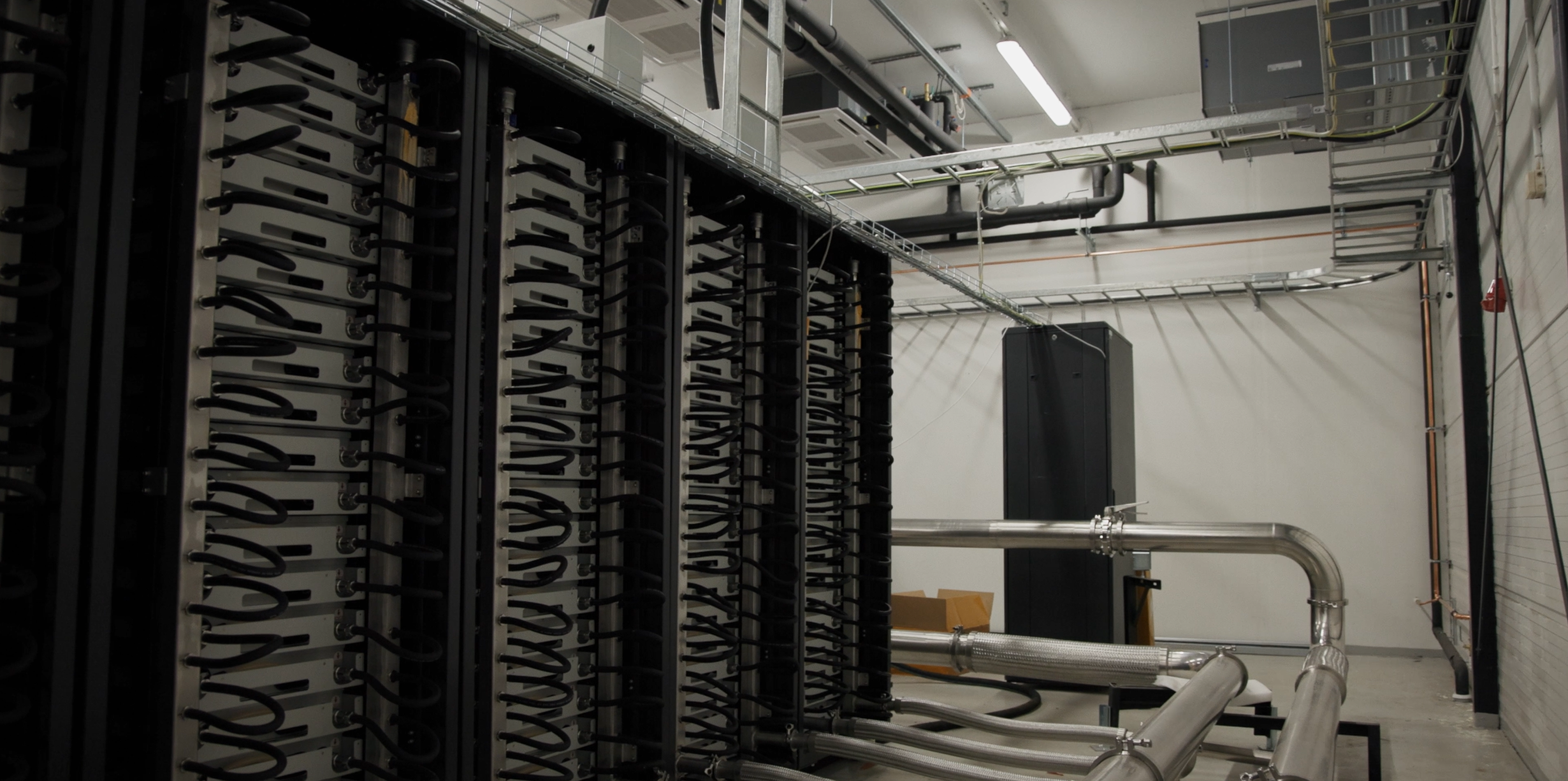
Liquid cooling
Finland has developed district heating networks since the 1950s, enabling thermal energy to be transferred efficiently from one location to another. Combined with the heating demand created by the Nordic climate, this infrastructure makes Finland an attractive location for international data center projects.
Calefa provides data center cooling and waste heat recovery with AmbiHeat heat pump systems.
Utilizing Data Center Waste Heat Is Becoming a Regulatory Requirement
Under the EU Energy Efficiency Directive, data centers with a total energy input of more than 1 MW are expected to utilize waste heat where technically and economically feasible. If an existing data center does not recover or reuse waste heat, the operator must be able to demonstrate through a cost-benefit analysis that utilization is not viable.
These requirements are part of the EU’s wider push toward energy-efficient and sustainable digital infrastructure. In practice, the chosen method for utilizing the waste heat generated by data center cooling remains the responsibility of the data center operator.
The Benefits of Heat Pump Technology in Data Center Cooling
Heat pumps enable the energy generated in data center cooling to be utilized efficiently. In practice, waste heat from cooling methods such as liquid cooling can be upgraded to a higher temperature with heat pump technology, making it suitable for use in district heating networks.
MinersLoop’s data center in Seinäjoki, Finland, uses the AmbiHeat system in connection with liquid cooling. Read more here.
For data centers, utilizing waste heat from cooling can improve cooling efficiency, reduce carbon dioxide emissions and strengthen operational reliability.
“At the same time, data center operators can help energy companies reduce the use of fossil fuels in heat production,” says Petri Vuori from Calefa.
Finland’s District Heating Infrastructure Attracts International Interest
Waste heat from data center cooling can provide a significant amount of energy throughout the year. With 4 MW of cooling capacity, the total thermal output can reach up to 5 MW, enough to cover a meaningful share of a small city’s district heating demand.
“The thermal energy recovered from data center cooling can become a significant resource in future heat production,” Vuori estimates.
According to Vuori, Finland is an especially attractive location for international data center investments because the waste heat generated by cooling can be directed into productive use through the country’s extensive district heating infrastructure.
“Finland has both the infrastructure and the climate-driven demand required to utilize thermal energy effectively,” he summarizes.
Calefa Has Longstanding Experience in Data Center Cooling
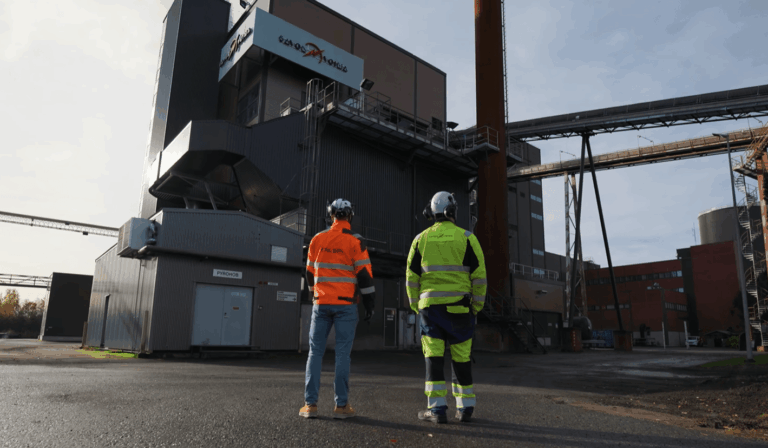
As the size of data centers in Finland has increased, Calefa’s waste heat recovery implementations have also grown in capacity. One of the largest current implementations is located in Seinäjoki, where the AmbiHeat heat pump system upgrades waste heat from MinersLoop’s data center into district heating for Seinäjoen Energia’s district heating network.
At the MinersLoop site, the total cooling capacity of the solution is 4 MW, and the heat pump plant provides a total thermal output of 5 MW. The efficiency of the gradually expanded plant has exceeded a COP value of 5.
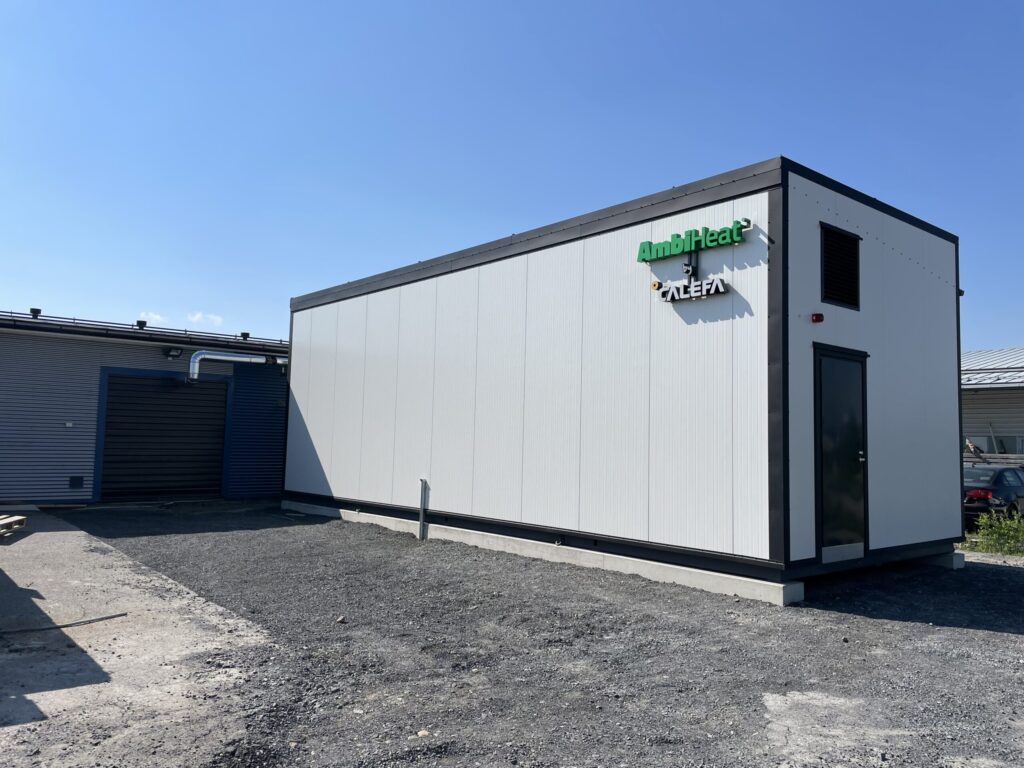
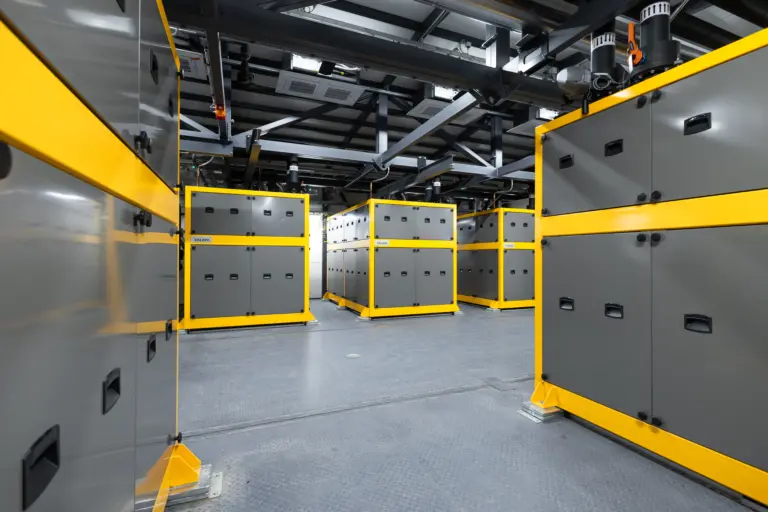
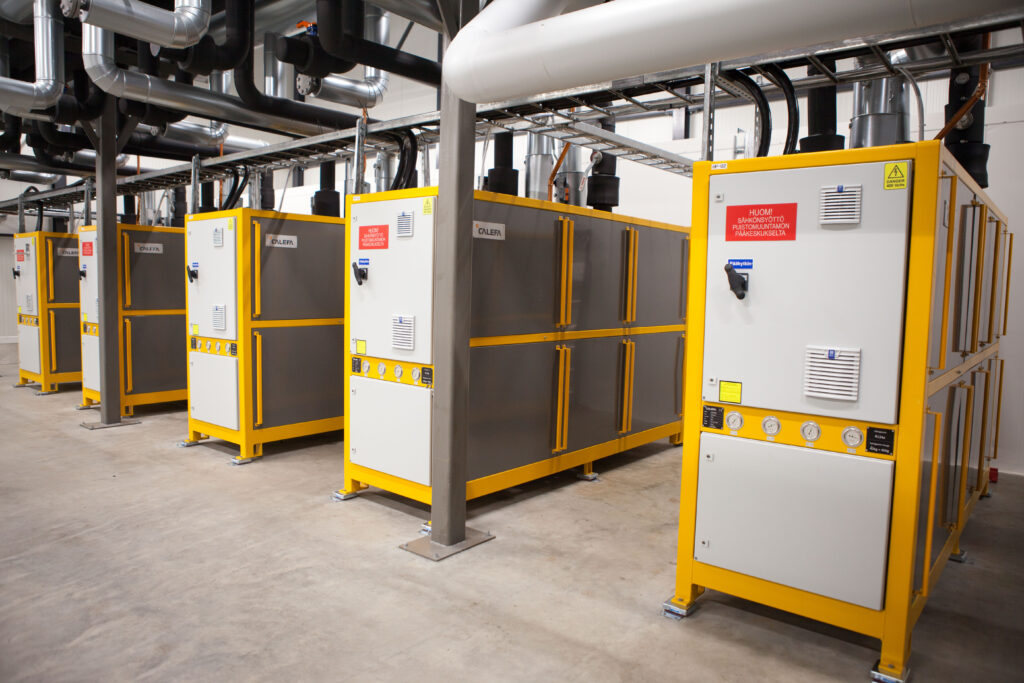
“The size of the heat pump modules can be adapted to the cooling demand, and the number of modules can also be increased gradually as cooling needs grow with computing capacity,” says Vuori from Calefa.
The MinersLoop data center project was not Calefa’s first project related to data center cooling and waste heat recovery.
Earlier projects with Bittiguru, Nivos and Vatajankoski have also enabled waste heat from cooling to be utilized in nearby properties and district heating networks. The scale of these implementations has ranged from hundreds of kilowatts to approximately 10 MW. What they have in common is the modular AmbiHeat heat pump plant.
“Through several projects, we have learned that close cooperation between the local energy company and the data center operator is essential for a successful implementation, starting already from the planning of the data center’s location. This makes it possible for the data center to produce thermal energy, for example, for the outer areas of a district heating network,” Vuori explains.
Modularity as a Key Factor in Data Center Cooling
Data centers typically scale their computing capacity gradually over time.
As computing capacity increases, the amount of waste heat generated in cooling also grows. The modularity of Calefa’s AmbiHeat system makes it possible to increase waste heat utilization capacity in line with this development.
“A modular system can be easily expanded with new modules, increasing the size and capacity of the heat pump plant,” Vuori illustrates.
At Calefa, the gradual increase in data center computing capacity is taken into account already in the heat pump system design phase. This enables data center cooling to be implemented as efficiently as possible from both a technical and economic perspective.
5 Reasons to Choose Calefa for Data Center Waste Heat Utilization
- Waste heat from data center cooling can be utilized with excellent efficiency using the AmbiHeat plant.
- The unique modular structure of the AmbiHeat plant enables the solution to be scaled gradually as computing capacity or cooling demand increases.
- Calefa is an internationally recognized expert in waste heat recovery and heat pump technology, delivering complete solutions tailored to customer needs.
- Calefa’s data center solutions can be applied across Finland and the Nordics, enabling data centers to be located where conditions are most cost-efficient.
- Calefa understands the Nordic energy sector and has extensive experience working in close cooperation with local energy companies.
Would you like to learn more about the opportunities AmbiHeat can offer for data center cooling?
Contact our experts or download the AmbiHeat guide.

Petri Vuori