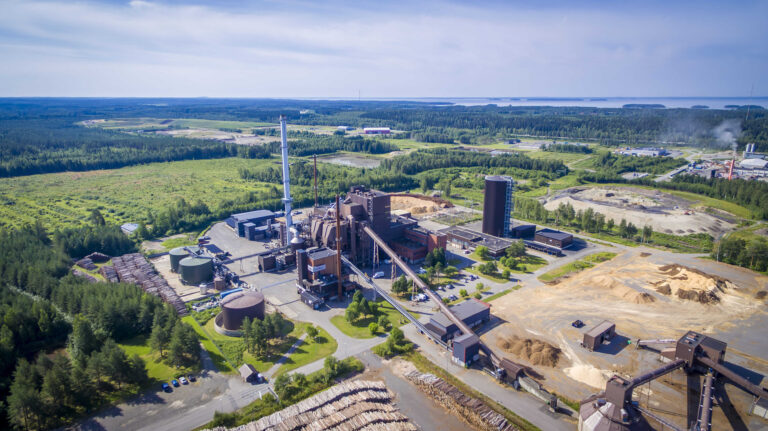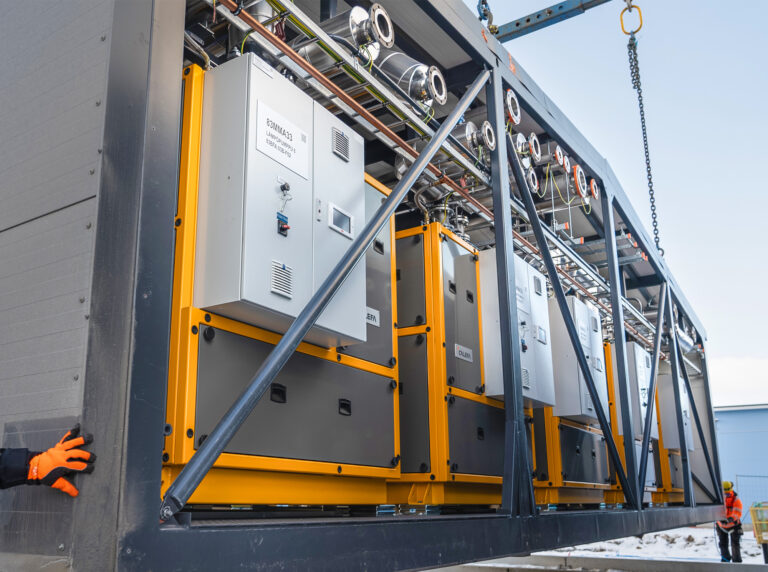
The AmbiSteam solution enables the use of low‑temperature waste heat streams as part of existing steam systems in bioproduct production. Based on steam heat pump technology, the solution reduces fuel consumption, lowers emissions, and improves overall energy efficiency at industrial sites.
Low-temperature Waste Heat Has Been a Blind Spot in Industrial Energy Systems
Energy systems in the bioproduct industry have traditionally been optimized around high‑temperature processes and combustion-based steam generation.
Continuous industrial processes require large and stable steam flows, which makes the reliability and controllability of steam production a central design criterion for the entire energy plant.
Although heat recovery is already widely used in industrial facilities, system-level limitations are particularly clear when it comes to low‑temperature waste heat streams.
Solutions based on direct heat exchange are only able to recover a part of the available heat. Once the temperature drops below a certain level, the remaining heat can no longer be utilized directly in steam or process systems.
“Conventional direct heat recovery methods typically capture only a few tens of percent of the available heat. The rest is simply wasted,” says Lari Heinonen, Sales Manager at Calefa.
According to Heinonen, this is exactly where a significant energy efficiency potential lies.
“More efficient utilization of low‑temperature waste heat streams offers a major opportunity to improve plant-level energy efficiency,” he notes.
Temperature Levels Define the Usability of Waste Heat Streams
Waste heat generated in industrial processes spans a wide range of temperature levels. At higher temperatures, heat can still be transferred directly to other processes or used for preheating. By contrast, waste heat at around 40–60 °C often falls into a grey area: there is a large amount of energy available, but the temperature level is too low for direct reuse in process or steam systems.
This is where steam heat pump technology changes the logic of the energy system. AmbiSteam makes it possible to upgrade low‑temperature waste heat to a level where it can be reused as part of the plant’s steam system.
“Utilizing low‑temperature waste heat streams is one of the most significant energy efficiency potentials that remains partly untapped in the bioproduct industry,” Heinonen states.
AmbiSteam as Part of an Existing Steam System
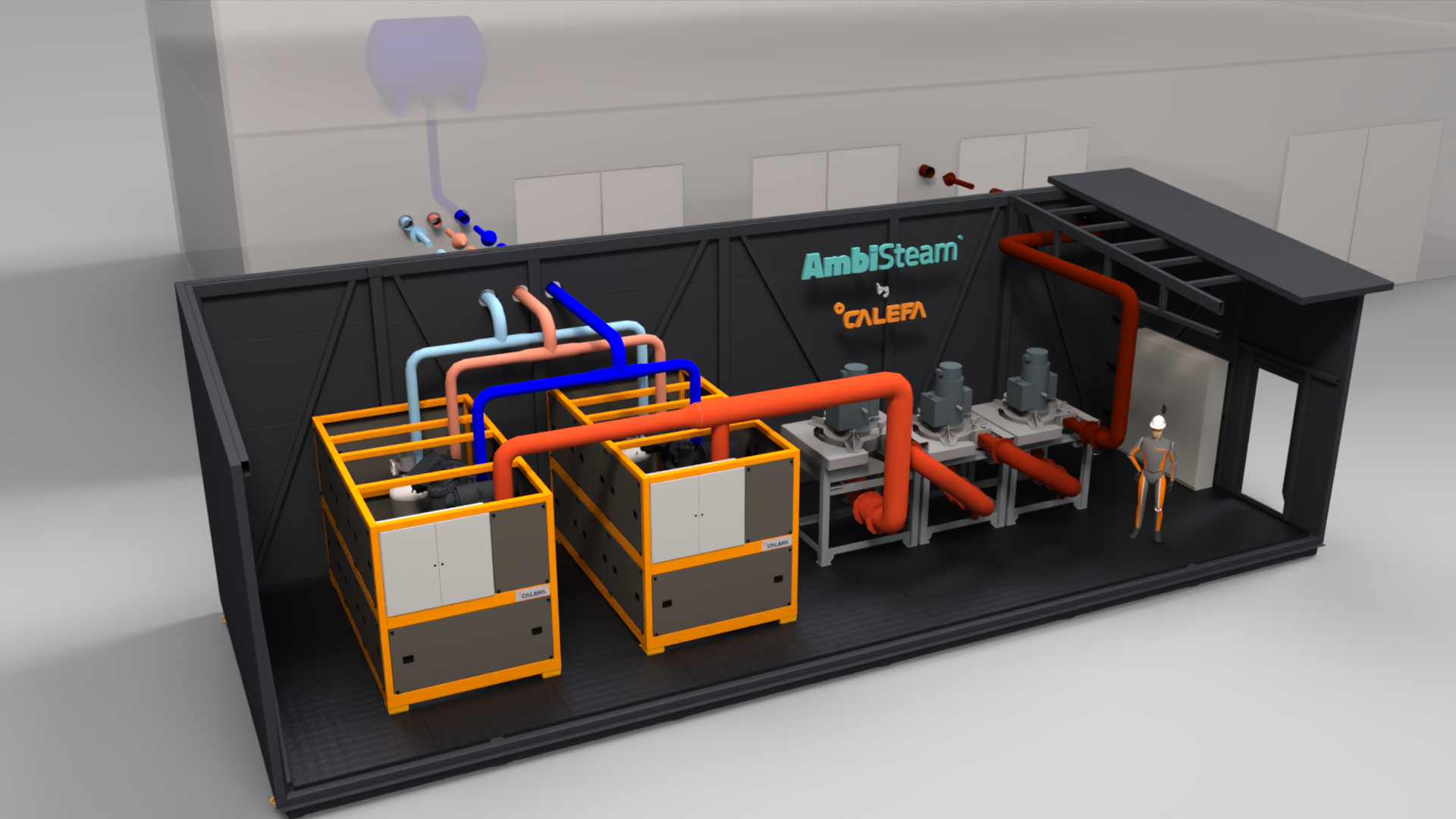
The AmbiSteam solution is based on Calefa’s SteamLevel® heat pump technology, which has been specifically designed for integration into industrial steam systems. The solution complements existing steam generation by recovering unused waste heat from industrial processes.
In the AmbiSteam solution:
- low‑temperature waste heat (for example 40–70 °C) generated in processes is recovered
- the temperature is upgraded using a heat pump and, where needed, an integrated MVR system
- the produced steam is fed directly into the plant’s existing steam network
An AmbiSteam plant can produce process steam at pressures exceeding 5 bars, which can be used directly in industrial processes without any changes to end-use equipment.
In large industrial plants, steam demand can reach tens of megawatts. For example, a single paper or board machine may require thermal power of several tens of megawatts.
“AmbiSteam is integrated into the existing energy system, enabling more energy‑efficient steam production for industrial processes than before,” Heinonen explains.
Example of the Heat Balance of a Board Machine Drying Section
Board machine production | 50 | t/h |
Water evaporated in drying section | 15 | kg H2O/s |
Specific steam consumption per evaporated water | 1.2 | kg steam/kg H2O |
Steam consumption | 18 | kg steam/s |
Steam power | 41 | MW |
Heat recovery efficiency | 30 | % |
Recovered heat output | 28 | MW |
Annual recovered heat (8000 h/a) | 226800 | MWh/a |
Heat price | 50 | €/MWh |
Cost of wasted energy | 11 | M€/a |
The Role of AmbiSteam in Large Steam Systems
From a techno‑economic perspective, the best results are achieved when heat recovery projects are designed with a comprehensive understanding of surrounding processes, temperature levels, and overall energy balances.
As the efficiency of a heat pump depends on the temperature difference between the waste heat source and the produced heat, special attention should be paid to system integration.
The highest efficiency is achieved when the same heat pump system is used not only for steam production but also for lower‑temperature heating applications, such as process water heating or drying air preheating.
The table below presents illustrative efficiencies and corresponding heat costs in scenarios where both steam production and lower‑temperature heating are combined.
Temperature of the waste heat (fluid), °C | 50 | 60 |
|---|---|---|
COP (steam +140 °C; 2,6 bar(g) + heating) | 3,3 | 4,1 |
Electricity price, €/MWh | 60 | 60 |
Cost of heating generated with heat pump €/MWh | 18 | 15 |
COP (steam+160 °C; 5,2 bar(g) + heating) | 2,9 | 3,6 |
Electricity price, €/MWh | 60 | 60 |
Cost of heating generated with heat pump €/MWh | 20 | 16 |
“As steam pressure increases, electricity consumption also rises. We always evaluate case by case how to utilize steam‑producing heat pump systems as optimally as possible. However, steam produced using waste heat and heat pumps is practically always significantly cheaper than steam generated through conventional combustion-based methods,” Heinonen notes.
Calefa’s first industrial steam‑producing heat pump will be commissioned at a forest industry production facility in April. The solution is based on advanced SteamLevel® technology and will supply steam directly into the customer’s steam line.
Read more about how the AmbiSteam solution is transforming industrial steam production
The Boundary Conditions in Bioproduct Industry Energy Balances Are Changing
Energy systems that were previously designed to be largely energy self‑sufficient are now being reassessed as new applications are found for different biomass fractions, such as lignin. This creates increasing opportunities for waste heat utilization solutions like AmbiSteam.
For example, CO₂ capture or lignin valorization in the pulp industry would significantly alter plant energy systems.
AmbiSteam provides a means to return low‑temperature waste heat generated in bioproduct industry processes back into productive use in the form of steam, both now and in the future. In doing so, it helps balance changing energy systems without increasing combustion-based production.
A Solution for Developing Steam Production in the Bioproduct Industry
Would you like to assess how AmbiSteam could support your plant’s energy balance management and steam production optimization, now and in the future?
Learn more about the AmbiSteam solution and discuss an assessment with our experts.
Contact:

Lari Heinonen
Sales Manager
+358 40 5238591
lari.heinonen@calefa.fi