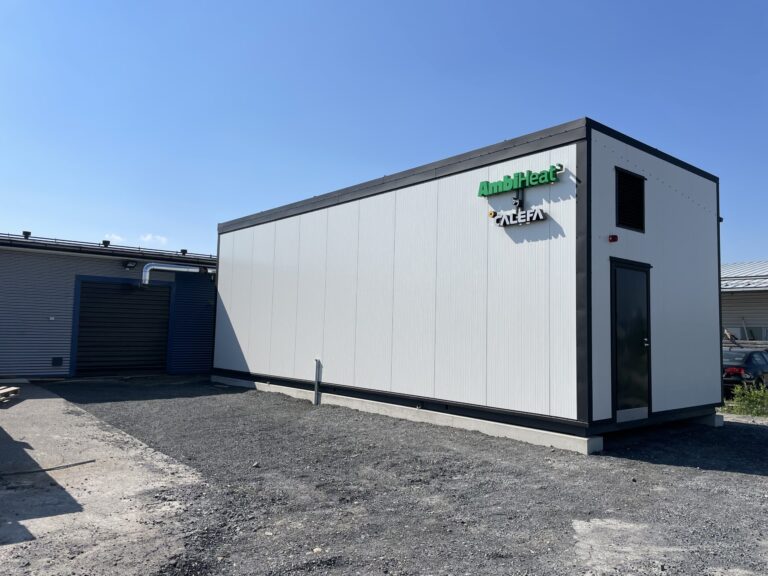
The 4 MW AmbiHeat heat pump plant in Kouvola, Finland, captures heat from treated wastewater and turns it into district heating. The project reduces local energy company KSS Energia’s heat production emissions, cuts the need for fossil fuels, and supports the integration of circular economy solutions into energy production.
Watch the video below to learn more about KSS Energia’s implementation.
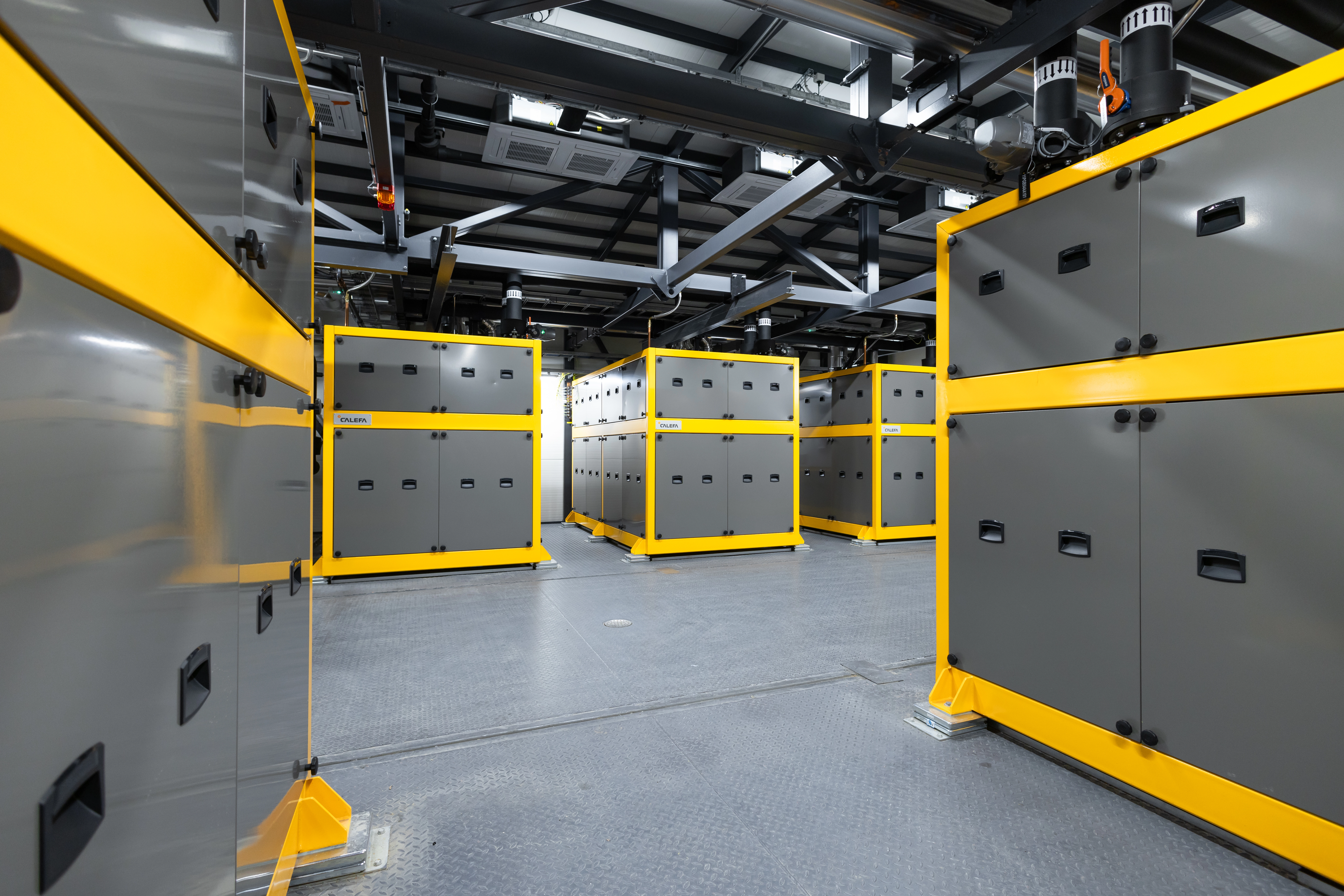
The 4 MW AmbiHeat heat pump plant utilizes treated wastewater from Kouvolan Vesi’s Mäkikylä wastewater treatment plant. The water temperatures range from approximately 5 to 16°C, depending on the season. With the help of six heat pumps, heat that would otherwise go to waste is upgraded into district heating at approximately 90°C and fed into Kouvola’s district heating network. The plant’s estimated annual production is around 35 GWh, corresponding to the annual heating demand of approximately 1,700 households in Kouvola.
The significance of the project is particularly evident in the transformation of Kouvola’s heat production structure. The plant has been designed as a baseload facility operating year-round. At the same time, it replaces the use of natural gas and supports KSS Energia’s target of achieving carbon-neutral heat production by 2030.
Capturing Value Even from 5°C Wastewater with a Modular Delivery
According to Jukka Rämä, Director of Asset Management at KSS Energia, the project progressed in good cooperation and potential changes were addressed quickly. On both the Calefa and KSS Energia sides, he says the approach remained solution-oriented throughout the project.
“From the very beginning, it was clear that Calefa’s objective was not only to deliver the plant, but also to ensure that the overall solution would continue to work after testing and commissioning,” says Rämä.
The modular implementation familiar from Calefa’s AmbiHeat concept was a key solution in the project. Modules manufactured under factory-controlled conditions simplified logistics and helped ensure the quality of the final delivery. Thanks to the modular delivery model, groundwork and foundation works on site could proceed at the same time as the plant was being built at the factory.
More Than 4 MW of Heat Output from 7°C Wastewater
According to KSS Energia Project Manager Altti Väre, Calefa’s automated AmbiHeat heat pump plant is an excellent fit for KSS Energia’s heat production portfolio.
“We wanted a modern and automated plant that is easy to integrate into our production control system,” says Väre.
Equipped with a Siemens S7 automation system, the AmbiHeat heat pump plant has performed excellently during the testing period, delivering heat output above its design values.
“During the testing period, the wastewater temperature was 7°C, and at that point we achieved just under 4.4 MW of heat output from the plant, exceeding the design values,” Väre explains.
A Concrete Step Toward Carbon Neutrality
The plant’s climate impact is significant, as carbon dioxide emissions from heat production can be reduced by 4,000–14,000 tonnes per year depending on which fossil-based production it replaces. At the same time, it adds new electrified heat production capacity for KSS Energia, strengthening the production structure and reducing dependence on combustion-based solutions.
“The completed plant represents one important step on our carbon neutrality roadmap,” says Jukka Rämä from KSS Energia.
According to Altti Väre, the AmbiHeat plant handed over at the end of April will play a particularly important role during the summer season, as it can cover around one third of the summer load in Kouvola’s district heating network. On an annual level, it replaces the use of natural gas equivalent to 35 GWh.
The plant is also significant from the perspective of the local circular economy. Sari Pilli from Kouvolan Vesi notes that the heat pump plant not only significantly improves the treatment plant’s degree of self-sufficiency, but also helps prepare for future requirements.
The revised Urban Waste Water Treatment Directive will require wastewater treatment plants to adopt increasingly energy-efficient solutions.
“The Mäkikylä heat pump plant is part of the development steps needed to meet future requirements. It is great to be part of regional cooperation that also strengthens collaboration between different actors in the city. There truly is strength in cooperation,” says Pilli.
Utilizing Wastewater Heat Is Part of the Energy Transition
The project also reflects ongoing changes in heat production.
In this project, heat recovered from treated wastewater is used as a local energy source for district heating production in Kouvola.
In Kouvola, the overall solution also required the construction of an approximately 2.7-kilometre transmission pipeline, but this did not become an obstacle given the project’s significant long-term benefits.
“With these benefits, building the 2.7-kilometre transmission pipeline was well worth it,” says Väre from KSS Energia.
According to Calefa CEO Petri Vuori, KSS Energia’s project is more than a single plant delivery.
“This implementation is once again proof that the green transition is progressing through concrete solutions that have an immediate impact on both emissions and regional energy self-sufficiency,” Vuori concludes.