
Key Points Covered:
Wide Application Possibilities for Waste Heat Upgraded to Steam
Various industrial cooling and drying processes generate significant amounts of waste heat. Traditionally, heat pumps have been used to produce hot water, but in many processes, steam is more useful than hot water.
“Steam is an efficient way to transfer large amounts of energy from one place to another, which is why it is widely favored in industry,” says Calefa’s expert Lari Heinonen.
For a heat pump investment to make technical and economic sense in industry, there must be both a source of waste heat and a use case—a heat sink. According to Heinonen, there is plenty of waste heat in industry, and the ability to convert it into steam opens even more doors for its utilization.
“Many industrial processes were originally designed to use steam. Using waste heat to produce steam significantly increases the possibilities for utilizing waste heat in industry.”
More Steam from the Same Resources with a Heat Pump
Generating steam from waste heat allows the reduction of fuel-based steam production with a more energy-efficient heat pump solution. On the other hand, it can increase the steam production capacity without additional fuel costs.
“With a steam heat pump, the amount of purchased energy is reduced significantly, almost equivalent to the amount of energy gathered from the waste heat source,” Heinonen explains.
While Calefa’s steam heat pump solution can significantly cut steam production costs, it is also an effective solution for meeting growing steam demand in production processes.
“If more steam is needed in the process, AmbiSteam can produce it efficiently from the waste heat already generated,” Heinonen continues.
When the same energy is reused, resources are not wasted, and production costs can be minimized. Since waste heat serves as the primary energy source for steam, there is no need for separate fuels or new environmental permits required for them.
SteamLevel® Heat Pump Technology Enables Emission-Free Steam Production
A large part of the energy used in industry is heat, which also affects the carbon footprint of the end products.
“Industry is constantly striving for lower emission targets. Achieving these targets means that the CO2 emissions from steam production play a significant role.”
Calefa’s AmbiSteam solution is based on SteamLevel technology. It enables completely emission-free steam production and can be a major step in reducing a plant’s CO2 emissions. If renewable electricity is used to operate the steam heat pump, the CO2 emissions from steam production disappear entirely.
“Producing steam by upgrading waste heat enables significant emission reductions for industry, alongside cost-effectiveness,” Heinonen summarizes.
Modular AmbiSteam Solution Is Quick to Integrate into Industrial Systems
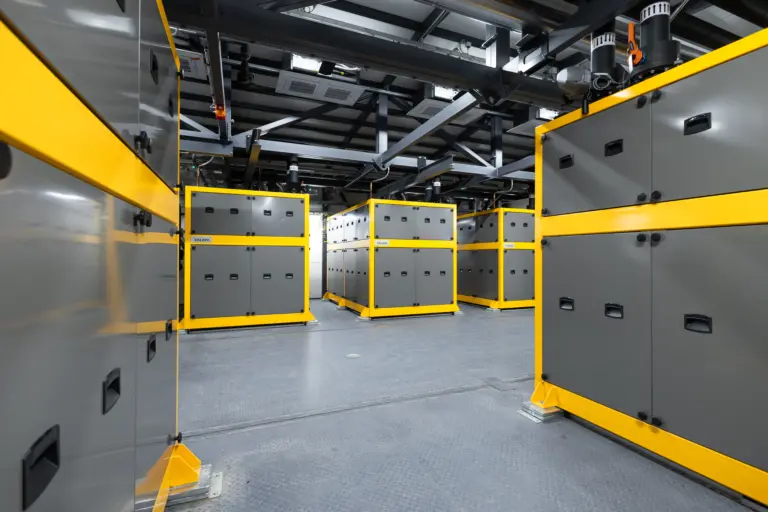
The SteamLevel® steam heat pump is delivered as part of Calefa’s AmbiSteam plant as a turnkey solution. The concept is the same as the company’s well-known AmbiHeat® heat pump plant, but the AmbiSteam plant produces steam instead of hot water.
A modular plant can be quickly integrated into an industrial facility’s systems without a lengthy construction phase. The same plant can also include MVR technology to increase steam pressure, as part of the overall delivery.
“A large part of the work related to AmbiSteam can be done during normal industrial production. The heat pump plant and pipelines can be prepared and connected to the system at a suitable moment,” Heinonen describes.
The plug-and-play solution is also compact in terms of space. Compared to fuel-based steam production methods, the AmbiSteam solution takes up much less area on the factory site, as, for example, fuel reception is not needed. Truck traffic for fuel deliveries also decreases thanks to the steam heat pump that recycles waste heat.
Solution for Decentralized Steam Production
Steam is often produced centrally in factory environments and then transferred via pipelines to processes.
“There is always some loss in transfer,” Heinonen notes.
With the AmbiSteam solution, steam can be produced compactly where it is needed. Efficient reprocessing even enables a somewhat closed loop.
“If the waste heat from the exhaust air of a drying process is reused for steam production with SteamLevel heat pumps, in the best case, you get an almost closed loop, with only electricity being brought in as energy.”
Industrial Steam Production in Transition
Industrial steam processes have traditionally been designed from the perspective of steam produced by combustion methods. Even in traditional processes, steam consumption can be directly reduced with a steam heat pump.
Additionally, steam pressure can be increased after the heat pump using various methods, such as MVR and thermocompression technologies. With the AmbiSteam solution based on SteamLevel, steam can be produced at pressures exceeding 5 bars.
On the other hand, industry is moving towards lower temperatures and more efficient drying processes, which opens even more opportunities for heat pump-produced steam with excellent efficiency.
For example, in the paper industry, the trend has been towards lighter paper grades, leading to lower steam pressures in drying processes.
“When designing new plants, different steam production methods are increasingly considered. The number of applications for steam heat pumps will certainly grow, and I am very excited about this new application for heat pumps,” says Heinonen.
Ask more:

Lari Heinonen Technical Sales Specialist 040 5238591 lari.heinonen@calefa.fi